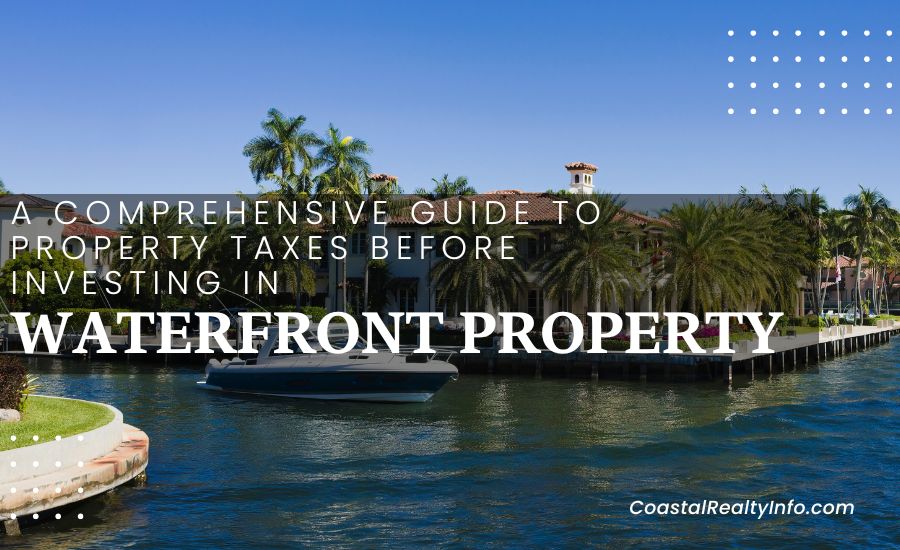
Understanding Property Taxes Before Purchasing a Waterfront Home
Whether you are searching for a stunning new primary residence, considering buying a luxury vacation home, or interested in trying your hand at real estate investments, there are many different benefits of owning a waterfront house. The Forgotten Coast of Florida boasts an array of stunning oceanfront home properties with beautiful waterfront amenities in the many seaside coastal towns.
In this article, we will discuss property taxes on waterfront homes to gain an understanding before you decide to make a full investment.
Waterfront Houses and Taxes
Waterfront properties are highly desirable, thanks to their stunning scenic views and recreational opportunities on the water. This makes them excellent real estate investments if you plan on opening it as a popular rental or you are planning on investing for future appreciation. Classifying your home for mortgage purposes upfront and upcoming tax season is important for the following reasons:
- You have intentions of living in the house most of the year as your primary residence.
- A home used as a vacation home and not the primary residence is a secondary residence.
- If you intend to use the property as a rental, it can be considered an investment property.
Waterfront properties are usually subject to higher property taxes regardless of their usage classification. Therefore, it is important to understand the local tax laws before purchasing a waterfront home.
What are Property Taxes in Real Estate?
Local governments levy property taxes on property owners to provide revenue for many different services. These tax-funded services usually include schools, local law enforcement, full-time fire department, garbage collection, and public parks. The better the facilities and services, the higher the taxes usually are.
How are Property Taxes Calculated in Real Estate?
Property taxes are affected by the neighborhood in which you reside. The taxes are determined by the property's assessed value and the area's tax rate or a mill levy. Below are additional terms that fall beneath the property tax assessment that are important to understand.
- Fair Market Value
The fair market value of a home is based on the amount that a house is expected to sell for on the current market between a knowledgeable seller and buyer. You can use a home value estimator to find out more information about how this process works.
- Assessed Value
When property taxes are calculated, the assessed value is based on the assigned home dollar amount. It can be assessed annually or when a property is purchased or under renovation. Features that can have an impact on the assessed value of a home can include the following:
-
- The square footage of the home.
- The number of bathrooms and bedrooms in the home.
- The amount of acreage the home sits on.
- The purchase price of the home.
- Nearby comparable property types.
A property's assessed value usually falls between 80-90% of its fair market value. The assessed value of the home, minus exemptions or different adjustments, is the taxable value. Current annual property tax information can usually be found on a real estate listing online. You can also look for the needed information on the local tax assessor or municipality website or call the office for additional information.
- Mill Levy
A mill levy is a tax assessment rate for local real estate. This number will vary significantly based on the area, public amenities, and the local government's required revenue. The office of the tax assessor or website will list the property tax levy as a percentage. A property's taxes can be estimated by multiplying the levy by a home's assessed value.
When are Property Taxes Paid?
When a real estate transaction is underway, the buyer and seller typically split the cost of the property taxes, usually prorated based on the time that each party owned the property in question. Buyers and sellers can also opt to negotiate who pays specific fees, including property taxes. Escrow accounts are usually established to fund property taxes when a house is financed, which is set up by a mortgage provider. They will be responsible for estimating property taxes for the next year, and the payments are split by 12 and then added to the monthly mortgage payment. The money will then be dispersed by the lender back into the escrow account to pay the property taxes when they are due.
How to Deduct Property Taxes
It is always within the realm of possibility to deduct your property taxes from your federal income taxes, even if the home is classified as a vacation home. You can deduct up to $10k, which will include property taxes, sale tax deductions, and state income.
Hidden Costs for Waterfront Homes to Keep an Eye Out For
In addition to property taxes, different hidden costs are associated with waterfront homes, including the following:
- Lots that are Leased: Depending on who the owner of the waterfront property is and the shoreline, you can opt to enter into a long-term lease with the land owner. When you are considering a waterfront property purchase, find out who owns the shoreline and if the home is a leased lot.
- Homeowner's Insurance: Waterfront homes usually command higher insurance, often including additional flood insurance for increased exposure to the natural elements. Your regular homeowner's insurance might not cover structures such as sea walls or docks, and additional insurance might be required.
- Boat Docks: Whether you build a new dock or you are fixing up an existing one, a high-quality structure is a small investment worth having.
Work with a Trusted Real Estate Professional
Purchasing a waterfront home will take an impressive amount of determination and bravery, so it is going to take an exceptional real estate agent to get the job done. Knowledgeable professionals will be able to guide you through the local laws and help you estimate your potential property taxes. An experienced real estate agent on the Forgotten Coast of Florida will be a valuable asset every step along the way.
Bottom Line
Property taxes can sometimes seem intimidating to understand, but once you get the general idea, they aren't too intimidating after all. When you are ready to explore all that living waterfront on the Forgotten Coast of Florida has to offer, find your ideal real estate agent to help you along the way to obtaining your goal of being a waterfront homeowner. Trust the real estate professionals at Coastal Realty Group to guide you in finding and settling down in the home of your dreams in the many beautiful, thriving waterfront neighborhoods that make up the Forgotten Coast of Florida, today.


